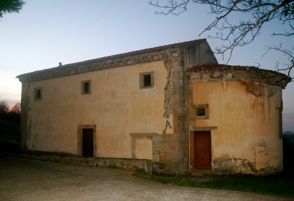
Junco is one of the nine parishes (administrative divisions) in Ribadesella, a municipality within the province of Asturias, in northern Spain. This parish sits on top of a mountain overviewing the valley and bay where the Sella River meets the Cantabrian Sea. It is also the place where the Church of Santa María de Junco is located, a building of Romanic origin, dating from the first half of the XIII century and reformed in the XVI century, having been partially destroyed in the XX century during the Civil War. The church’s layout has a single rectangular nave with a semicircular apse, which has a small window. On top of the front door has the Junco family crest, which gives its name to the church. The decoration is still preserved at the XIII century single apse, XIV and XV century remains are still preserved today in a door towards the south wall.


Junco or Juncus is a genus in the plant family of the Juncaceae. It consists of some 200 to 300 or more species of grassy plants commonly called rushes. They occur in all sorts of wetlands regions all over the world, but rarely in the tropics. Juncus rushes are characterized by their nude leaves, which are either thin and more or less flattened or round and containing spongy pith. They grow as tussocks or more isolated stalks, bearing inflorescences near the tip. Many species are exceptionally hardy and some are even considered weeds in fine gardening. Generally their tolerance of extreme environmental conditions (except drought) means they are very suitable for ornamental purposes even where few other kind of plants grow. Historically and in many regions today, there is a vast use for artisanal purposes like the weaving the soft surface cover of tatami mats.
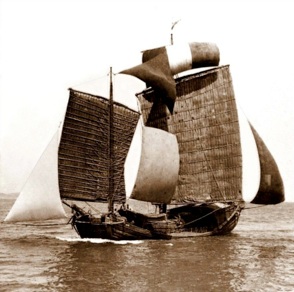
Junco or Sampan is one of the oldest sailing vessels known, as it has been documented since the year 600 B.C. and still in use in many parts of Southeast Asia today. The hull has a short aft, lacks of a keel and was used for both war and trade. Still to this day are very characteristic of the China Sea, both Genghis Khan and Kublai Khan used them in their attempts to conquer Japan. By the IX century A.D. the Chinese used them to carry goods to Indonesia and India and during the XV century sailed to East Africa. Its sails are made of thick fabric together with reeds, giving great stability and high thrust. The rudder was removable and higher than the ordinary vessels, which allowed them to navigate in shallow waters making it the favorite craft for piracy.
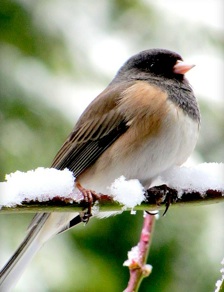
Junco is a small bird found in Northern America. The Junco biological systematics are still confusing after some decades of long research, with various authors accepting between three and twelve species. Their breeding habitat is coniferous or mixed forest areas throughout North America, ranging from subarctic taiga to high altitude mountain forests in Mexico and Central America south to Panama. Northern birds usually tend to migrate farther south; southern populations of them are permanent residents or altitudinal migrants, moving only a short distance downslope to avoid severe winter weather in the mountains. These birds forage on the ground and in winter, they often forage in flocks. They usually nest in well-hidden locations on the ground, low in a shrub or tree. Very popular among birdwatchers.